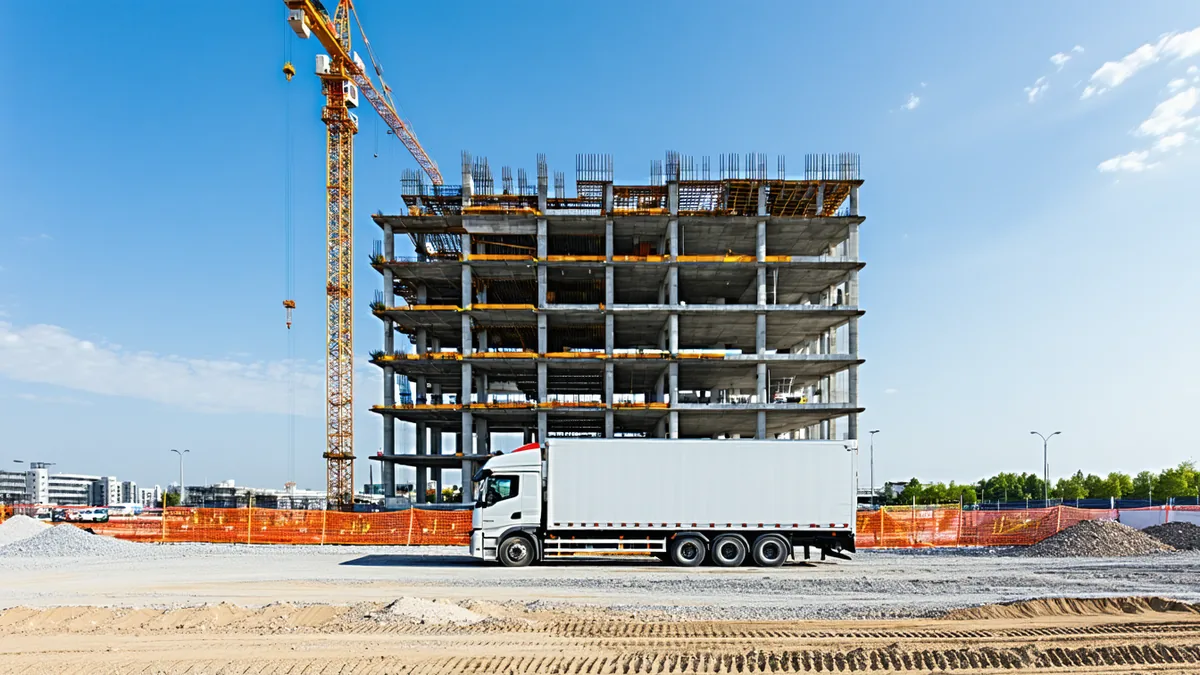
On any active commercial construction site, there are two worlds. There's the trailer world: the PM's domain of drawing sets, submittal logs, schedule updates, owner meetings, and RFI tracking spreadsheets. And there's the tower world — or the deck, or the pit, or the skin — where the superintendent and foremen are making real-time decisions based on what they can see, touch, and reach on a radio.
The communication infrastructure connecting these two worlds hasn't changed in 30 years. Walkie-talkies, phone calls, end-of-day verbal recaps, a handwritten daily log that makes it to the PM's desk two days later. The work gets done despite this — American commercial construction has been building complex structures on this model for decades. But "it works" and "it's not causing unnecessary cost" are different claims.
Where Information Goes to Die
The most expensive information gap in commercial construction isn't the RFI that takes 48 hours to answer — it's the decision that gets made in the field without the PM knowing it happened until the daily log arrives. Or doesn't arrive.
On a concrete-frame mid-rise in San Antonio — 12 stories, cast-in-place structure with post-tensioned slabs — the pour schedule runs on a two-week lookahead. Each level takes 3 to 4 days of forming, rebar, pre-pour inspection, pour, and cure time. The superintendent is coordinating concrete trucks, inspectors, pump placement, and weather windows simultaneously.
During a third-floor pour on a Tuesday, the concrete superintendent makes a judgment call: a section of slab at the stairwell core shows a 3-inch discrepancy from the formwork elevation spec. He elects to pull the forms slightly and re-support before continuing. He's done this before, it's within the super's judgment, and the decision doesn't require design input. But the decision does add two hours to the pour day and shifts the second-stage concrete delivery by three hours.
The PM finds out the following morning in the daily log. By then, the concrete truck was already rescheduled, the pump operator has been paid for three idle hours, and the pour sequence for the following day has a different starting point than the PM had briefed the owner on. Not a crisis — but a $1,400 unplanned cost and a minor schedule-narrative discrepancy with the owner's rep that requires an explanation call.
Multiply that kind of event by 30 per month on a complex project and you have a pattern: not individual disasters, but a constant low-grade friction between field reality and office awareness. That friction costs money. It costs relationships. And it accumulates into schedule drift that nobody can point to a single cause for.
The Communication Model That's Still the Default
Walk onto most active commercial construction sites today and the primary real-time communication infrastructure is still the two-way radio and the cell phone. The radio is for the immediate site — crew-to-crew coordination, safety, equipment positioning. The phone is for anything that requires a document, a decision, or someone who isn't on site.
The problem with the phone as an information infrastructure is that it produces no record unless someone decides to create one. A phone call between the superintendent and the MEP coordinator that results in a revised pipe routing decision — that decision either gets written up as an RFI, gets noted in the daily log, gets documented as a field directive, or it evaporates. Most of the time, on a busy project, it partially evaporates. The decision gets made; the documentation happens later if at all.
The walkie-talkie is even more ephemeral. Radio calls leave no record, no searchable history, no accountability trail. They're appropriate for real-time coordination within the site — "crane operator, I need the form panel at grid B-4" — but they're a bad medium for decisions that have schedule or cost implications.
The Four Information Gaps That Cost the Most
Not all field-to-office communication failures are equal. The ones that generate the most cost and schedule impact fall into four categories:
Scope creep through verbal direction
Owner's reps and architects who are physically present on site occasionally direct field work verbally — "while you're there, go ahead and extend that conduit run to the east wall" — without creating a formal change request. Field crews comply. The work gets done. Three weeks later, the GC is trying to price a change order for work that's already been completed and documented only in someone's memory. The stronger your real-time field documentation, the harder this is for an owner to dispute.
Subcontractor progress misalignment
The PM's schedule shows the electrical rough-in completing floor 4 by Friday. The actual crew pulled off floor 4 on Wednesday to handle a priority call on another project. Nobody told the PM. The following trade — drywall — shows up Monday expecting a cleared floor and finds the rough-in incomplete. A full day lost, and the PM is fielding an angry call from the drywall sub's PM without knowing what actually happened. Daily manpower logs that capture who was on-site by trade, updated in the afternoon, close this gap before the downstream damage occurs.
Pre-pour inspection coordination failures
On concrete projects, the pre-pour inspection is a hard gate — the third-party special inspector needs to clear the rebar placement and embed locations before the pour can proceed. If the superintendent's request for inspection arrives late, or if the inspector can't be reached, the pour shifts to the next day. Concrete trucks get rescheduled, pump operator gets a partial day charge, crew gets paid for standby time. On a project with 22 concrete pours in the schedule, even three or four inspection-day delays add up to a week of schedule impact. Getting inspection requests submitted earlier in the day — with photos of the completed work to let the inspector pre-review — reduces this gap significantly.
Safety and weather-related stop-work events
When a foreman calls a stop-work for a safety concern or a lightning protocol, the trailer needs to know immediately — not because they'll override the field decision, but because downstream scheduling decisions (concrete truck timing, inspector arrival, sub coordination) need to be adjusted fast. A stop-work event communicated to the PM's inbox at end-of-day is a stop-work event that has already caused cascading schedule disruption.
What "Real-Time" Actually Means in a Field Context
It's worth being honest about this: field crews are not going to become information managers. The superintendent running a tower crane and coordinating formwork installation is not going to stop every 30 minutes to file a structured report. Any communication improvement that adds significant administrative load to field leadership will fail through non-use.
The practical definition of real-time in a field context is: information moves from field to office within the same activity window, not at end of day. That means a foreman documents a verbal directive when the conversation ends, not that evening. A superintendent submits an inspection request when the rebar placement is complete, not when he gets back to the trailer. A manpower count gets entered mid-afternoon when the crews are visible, not reconstructed from memory the next morning.
The enabling condition for this isn't awareness or discipline — it's friction reduction. If submitting a daily update is a 2-minute task on a phone the super already has in his hand, it happens. If it's a 15-minute desktop exercise, it doesn't.
What Closing the Gap Is Worth
The schedule days recoverable from better field-to-office communication aren't dramatic in any individual event. They're one day here, four hours there, a subcontractor conflict caught two days earlier. The aggregate, across a 12 to 18 month commercial project, typically lands in the range of 8 to 15 working days of recoverable schedule. For a project with a $500-per-day liquidated damage clause, that's $4,000 to $7,500 of exposure per day, over an exposure window that might otherwise run two to three weeks.
That math isn't the main reason to fix field-to-office communication. The main reason is that a job site where the PM knows what's actually happening — in close to real time — makes better decisions. Changes get priced faster. Subcontractor performance issues get addressed before they compound. Owner relationships are based on current information rather than a one-day lag. The trailer and the tower stop operating as separate projects and start operating as the same one.